26 October 2020

New Levels of Fatigue

I was just reading an article about some of the fires that have plagued Colorado this autumn--two of them are still burning, and they've become the largest and second-largest wildfires in Colorado history.  The article ends with a statement from one of the firefighters who have been fighting the blazes:  "Everyone's just tired."

What an incredibly apt statement for this particular time in our lives.  Given the pandemic, the extreme weather, the number of fires, the relentless partisan politics in the States, a nasty election year, and so many other things going on, most of us are feeling an exhaustion unlike anything we've felt before.  The main problem is that we're not able to define it or even comprehend it fully, since it really is unlike anything we've felt before.

I think that "relentless" is a good word for the way things have been in our world recently.  Things just keep on keeping on, especially the pandemic, which is now much worse than it was back in March, when we shut everything down.  More people are getting the virus now than at any other time in the last nine months, when we had been hoping against hope that things might be slowing down by now.

One of the major problems that we're facing is that many people have given in to the fatigue, and they're now acting as if the virus has run its course, as they had hoped.  And their reckless behavior is unfortunately putting many more people at risk.

Fatigue can be a dangerous symptom.  It can lead us to take risks that we normally wouldn't take, to do things that we normally wouldn't do, to not do things that we normally would.  Someone who is fatigued can come up with any explanation at all to explain away risky behavior, and feel completely justified in their behavior.  "I'm just tired of that stupid mask" is something that I hear pretty regularly, as people go out in public without wearing it.

And of course, the reality is that it doesn't matter how tired of the mask they are--if they were exposed to the virus a couple of days ago, they may be spreading it now to others.  The masks provide only a small amount of protection to the wearer.  The purpose of the mask is to protect others from the wearer by limiting the amount of moisture that the person exhales from getting into the air, thus spreading the virus.

But when we're exhausted, reason isn't always our best friend.  We become more self-centered, focused much more strongly on our own needs.  It makes sense from a biological perspective--if our bodies are losing their strength and energy, then our minds need to find ways to deal with the problem.  If I've been running for two hours and I feel exhausted, then my mind needs to tell me to stop running.

Interestingly enough, I think that the time I spent in the Army was good preparation for this pandemic.  In that situation, we were forced to work past the limits of our endurance, and we became quite good at it.  And four years in the Army were definitely much more challenging than a year or two of wearing a mask.  To me, this is just a small blip in time, even if it does last two years.  Twenty years from now, these two years will seem like almost nothing--and there's nothing saying that this is going to last a full two years.  Hopefully, this will all be waning to a close by next summer.  But I'm fully prepared to wear a mask however long it takes.  It's simply not that big of a deal.

So how do we deal with exhaustion?  Of course, rest is important, but how do you rest from something that's so predominant, something that you're reminded of every time you go anywhere?  For me, it's very important to take a rest from the news at least a couple of days a week.  This is part of where the relentlessness comes in--we're constantly reminded of the pandemic and the election by newscasts, commercials, and television programs.  This also means taking a break from online news if you're feeling too exhausted to deal with it.

We do need to monitor ourselves better than we normally do, too.  We need to be sure that we're doing okay, that we're not suffering from the effects of exhaustion.  We can do this in part by looking at our behaviors, the things that we're doing and saying.  Are they things that we normally would do and say?  Or are we more touchy, more sensitive than normal?  Sometimes we need to notice these things so that we can plan an emergency day of rest for ourselves, for if we allow ourselves to continue functioning at 100% even while we're exhausted, the chances are much better that we're going to end up doing or saying something extremely damaging, to ourselves and possibly to others, too.

This is the kind of time, too, when practicing acceptance is very important.  Things are as they are, and they're not going to change just because we wish they were different.  It would be nice if our worry or concern could make things different, but they really can't.  This is one of the things that was drilled into us over and over again in the Army--your situation is what it is, and you have to deal with it as it is.  Period.  And this is a lesson that I think that many people who haven't had any sort of long-term training under trying circumstances have a harder time internalizing.  Some things take practice, and dealing with adversity over the long term rather than the short term is one of those things.

It's important that we talk to others, without that talking turning into mere complaining (which can feel good at the moment, but which is almost never effective).  It's important that we be able to express our frustrations and concerns, and even to share our encouragement with someone else who could use it because they're exhausted, too.  Helping others to cope can be one of the most important coping strategies that we use for ourselves.  Getting things out into the open helps us to keep from internalizing them in negative ways, too.  Suppressing frustration and stress and even anger can lead to more of the same, only stronger, later.

We can't wait for others to fix things for us.  We're living through this just as everyone else is, and if we wait for a vaccine or an election or something else to "happen," thinking that then all of our fatigue will go away, we're in for great disappointment.  "Things are as they are" may sound extremely Zen, but the truth is that it's a principal that people from everywhere have learned to be true.  If we don't like them as they are, usually we don't like what our lives have become because of them.  And our only real options are to change our own lives and actions to compensate for the issue (quarantine, mask-wearing, etc.), or accept it for what it is and continue living the way we were, albeit with risks--some of them unacceptable, such as putting others at risk to catch a potentially fatal virus.

We will get through.  Unfortunately, though, that statement doesn't apply to all those who already have died and who will die from the virus.  As a species, though, we'll probably be okay in a year or two, and we'll look back at these times and this exhaustion with a new perspective, having learned a great deal about ourselves and how we deal with long-term adversity.  Not all of us will be happy with what we see, but that's part of the learning experience of life, isn't it?

Hang in there.  If you're like probably more than 90% of the people in this world, you're exhausted.  You suffer from a fatigue unlike any you've probably felt before.  But each day is a new day, and we can take today's difficulties for one more day; and then tomorrow, we can do the same.  It's important that we keep in mind that things are as they are, and if we need to make any changes, we'll know how to make them when the right time comes.  Hang in there, and help others to hang in there, too.  This, too, shall pass.


23 October 2020

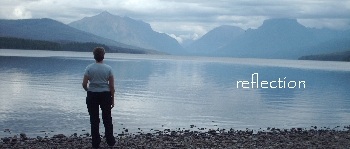
Reflection

 It's so very strange living in a world in which all of our conflict, all of our turmoil, is out in the open all the time, being exposed on social media and shared with anyone in the world who finds it.  It used to be that if I had a personal problem, I dealt with it on my own, usually asking for advice from one or two very trusted individuals.  Now, though, I can put it on social media with a blanket request for advice, and receive literally hundreds of responses, depending on how many friends or "followers" I have.

And when the advice does come in, I'll more than likely sift through it to find out how many people gave the advice that I wanted to hear.  Once I see several of those, I'm going to take that advice, and do what I wanted to do to begin with.

But troubled times aren't times for noise.  We already hear enough noise, in the arguments about politics and taxes, in the speeches of politicians who are trying to divide us, in the tears and cries for help from people who don't have enough to eat, who don't have work, who have lost loved ones to the pandemic, who are barely holding on in a world that so many people claim is here to have us thrive.  Noise is all about us, and times like those we're going through now call for more quiet, more peace, more reflection.  We live in a society that doesn't value reflection at all, and that fact is obvious in the ways that we're willing to damage the world we live in without giving it a thought, in the ways that we hurt our friends and neighbors without caring, in the ways that we hurt ourselves without realizing it.

Reflection is not a dirty word, believe it or not.  Reflection is our attempt to go inside and meet our authentic selves, that spirit that's deep within us that knows the difference between right and wrong, between need and desire, between true and false.  Reflection is our attempt to carve out a peaceful area in which we can thrive and grow and mature, without worrying about material goods or impressing other people or "getting ahead."  And in these tumultuous days that we're living through right now, reflection may be our last true haven, our last and only authentic chance for finding the sweet among the bitter, the true among the false, the good among the evil.

I believe that my best reflection takes place while I'm running, for then I'm able to think things through without distractions.  Yes, I have to watch the road ahead of me, but that doesn't keep me from pondering the important things in my life.  And it may be a misnomer to say "think things through," for the strength of reflection isn't necessarily in thinking things through and coming to conclusions.  Sometimes, it's important for me to bring something to mind without judging it, without trying to come up with solutions if it's a problem.  I just need to consider it.  If someone said something that offended me, it's tempting to think of comebacks or methods of revenge.

But what if I just ask myself, "Why?"  Why did that person say it?  Did I do something to deserve the comment?  Was the comment a result of his or her own frustration or anger, and really isn't about me at all?  Why does it offend me?  They're just words, right?  Why is it still on my mind?  It must be important to me somehow.  

When we reflect, we don't need to look for answers.  Rather, we need to feel who we are as an authentic human being, and apply that authenticity to our lives and our relationships.  There's a huge difference between what logic and reason can allow to be right, and what's authentically right for us as a member of the human race and an inhabitant of this planet.

But if we never take time out for reflection, we'll never hear that authentic voice because it's being stifled by all those other voices that aren't there for our good.

Find some peace and quiet, even if it's only for ten minutes a day.  And when you find it, don't allow your mind to just run over the same things it runs over when you're not alone in quiet.  Rather, find something to focus on--your breath, the beautiful picture on your wall, the image of your infant daughter or granddaughter, the memory of a day at the beach.  Let your mind slow down and quiet, and when it does so, then consider something that's bothering you--without trying to explain it or solve it.  A gun can kill you if you point it at yourself and pull the trigger, but it can't harm you at all if you just look at it and learn more about it.  It's similar with our thoughts--if we can examine them without judgment, we can learn from them, leading to new thoughts that are healthier and more helpful to us.

Hectic times are, ironically enough, times when reflection is most important.  Take some time to and for yourself, and learn what your own mind has to teach you.  You deserve the peace that you'll introduce to your life, and the people in your lives will be grateful to have a more grounded, peaceful person in their lives.


More thoughts and ideas on reflection.


09 October 2020

How Can I Live My Life Fully in These Days of Turmoil?

Things aren't as they normally have been in our world of today.  Between constantly worsening political division and a pandemic that has killed over a million people in the last eight months, as well as worsening wildfires all over the globe, widespread unemployment, weak economies, and many other factors that are affecting our lives today, we live in a world in which it can be challenging to survive, much less to thrive.

It is, after all, extremely stressful to be dealing with a virus that we never know when we might catch it, or what effects it will have on us when we do.  It's hard to watch people divide themselves on purely political grounds, and treat each other awfully when they do so.  It's very difficult to live with steady financial unsureness or instability, wondering when they may let us go at work--even if for a while--or when we won't be able to pay the rent or the mortgage.  It's difficult to see and hear so many people call us stupid for our political beliefs, or insult us because we do what we feel is right to do and say what we feel is right to say.

Difficult to live life fully?  Absolutely.  Impossible?  Absolutely not.

Now more than ever, it's important that we increase our awareness and our acceptance.  It's imperative that we live in the present moment during these tumultuous days, and that we spread more love and compassion in a world that desperately needs it.  We're being exposed constantly to news that is bad, to social media posts that are hate-filled and divisive, and to politicians who are making decisions based on what is expedient and what will earn them money rather than what is good for all of their constituents.  We see so many things now that we never used to see before the advent of the Internet that sometimes it's tempting to think that life and people are changing, but the truth is that people have always done things that are harmful and hurtful--we just never used to see as much of it all.

So how do we remain upbeat and positive in a world that seems to be intent upon beating us down and keeping us down?

First, we have to remember that the world isn't at all interested in beating us down.  The world itself is indifferent.  It simply is.  It's not trying to harm us or depress us--it's just doing its own thing, day after day.  So we can stop feeling that the world is somehow against us, for the world is still providing us with all the beauty and wonder that it provided us with last year at this time.

Second, we have to make ourselves open to the beauty and the wonder, and try to avoid reading too many social media posts and watching too many newscasts.  And when we do read and watch them, we need to be receptive to the positive and the beautiful, for it's there.  People are afraid these days, of many things, and much of what we see in the world around us is a result of that fear--people are expressing their fears in an attempt to get a grasp on them so that they aren't as strongly affected by them.  When they express their fears, though, it's easy for us to start to feel the same fears as we read about other people's fears.  My friend who is afraid of the virus may post new statistics that show that it's spreading more quickly--and when I read those statistics, I may adopt that same fear.  Another friend who hates a certain politician may post something that is infuriating about that person, and when I read it, I may start to feel the same anger and hatred.

But I can't do that if I'm to maintain my balance and my peace of mind and heart.  I have to learn to read those things objectively, and then move on without adopting the fear or anger behind the writing.  And I also need to find things to read and watch that balance out  the fear and anger, like a very positive movie or television show.  There is still much love and beauty in the world, but it doesn't help us a bit if we don't recognize it, pay attention to it, and appreciate it.

So these two things are a start.  There will be more strategies soon.  But for now, here's a challenge that you may want to accept:  when you read something negative this week, ask yourself how it make you feel, and then ask yourself if that feeling is helping you or hurting you.  And then, for the sake of balance, search out something positive, even if it means going to a search engine and typing in "positive memes" or "uplifting memes" or "positive videos."  There's plenty out there to find, and just one or two of them can help to lift our spirits.

So for now, I bid you adieu, until soon!


25 April 2020

Just When You Think. . . .

It took me quite a while this year to become used to the new school where I teach.  It especially took me a long time to become comfortable with the lessons that I was planning--I know what I need to teach and how, but so many other things factor into teaching (schedules, student levels, materials available, etc.) that it's not always a given that just because you know what you need to be doing, the circumstances will provide you with the ability to do that.  It took a while to get used to having no textbooks.  It took a while to having only three hours a week to (supposedly) teach students what they need to be learning--both according to the state standards and the knowledge of what they'll need in their futures.

But I was finally there, and we were almost at the end of the year.  And just when I thought that things were going to be smooth sailing until the summer break, the school closed and I had to turn to finishing the year online.

All of my class plans for the rest of the year, gone.  All of the assignments that would have worked great in class now wouldn't work nearly as well online.  I would no longer be able to explain anything to an entire class, as our classes must be asynchronous per district orders.  So we can't read an article and then discuss it in groups--or even in a big group.

In short, most of the work that I had done over the last six months and all of the plans that I had made to finish things up well and strongly were now irrelevant.  I had to come up with a completely new plan of action, with new assignments and new materials.

And as far as everything is concerned, the main question that I have to ask about all this is simple:  so what?

So what if I had to make a lot of changes?  Life sometimes throws you curveballs, and you can either stand there and complain about how unfair it is that the pitcher can throw a curve, or you can buckle down and do your best to hit that curve.

Yes, I have to do more and different work than I was supposed to have to do to earn my salary, but I'm not having to deal with many of the other tragedies that thousands of other people are dealing with.  And I do have a job--I haven't lost my salary.

Yes, I do miss seeing my students and I would rather not be locked in, unable to have significant contact with my colleagues and my students and my friends.  But if I'm going to live these days fully, I'm not going to be focused on what I'm missing, but on what I have--safe shelter in a comfortable home, food on the table, almost unlimited entertainment, and the ability to do my work safely from home over the Internet, among many, many other blessings.

Life sometimes throws us completely new situations that we hadn't planned for and that we know nothing about.  When that happens, it's important that we be adaptable and that we be able to let go of all that we had planned in order to face the new realities that life has provided us with.  And when my trip back east or my summer break or all the work I had done getting ready for the end of the year are all made impossible or useless, the only response that makes sense if I want to be happy in life is simply, "Oh, well."  There is absolutely nothing I can do to change these things, so I might as well accept them and make the best of my new situation.

Life in the Army was much like this--we had no idea sometimes what tomorrow would bring.  We often finished jobs only to find out immediately that we were tasked to do something else, too.  Our expected down time just didn't happen.

And we expected it because in the Army, we were bound to follow orders.  We didn't have a choice unless we wanted to face rather severe punishment.

In my life right now, my punishment for not accepting my current situation and making the best of it is quite simple:  I'd make myself miserable by feeling resentment for my loss of anger for all the new work I have to do.

I'd rather not be miserable.  So I just do the work, and I recognize and accept that much of the time I spent planning for the last couple of months now has turned out to be somewhat wasted time--and that's okay.  I was exercising my abilities to create classes and meet standards and engage students and help them learn.  I may be able to use the plans later, even.

When there's nothing that I can do about the way things are, I have to simply accept the way things are--that is, if I want to have a chance to be happy.  Of course, if I'm okay being miserable, I don't have to accept anything at all, do I?  But if I don't want to be miserable for the next four weeks of school before school is over for the year, then I need to simply do the job as it needs to be done, following the new rules and fulfilling the new set of needs.

Because life will go on the way it's going, with me or without me making the best of it.  If I'm unhappy and stressed and frustrated and annoyed, life will still go on.

I'd rather it go on with me being at ease, accepting, appreciative, grateful, and learning new things by meeting the new demands.

Which way would you rather have your next few weeks, months, or even years be for you?  Remember, it more often than not is your choice!

03 April 2020

Constant Worry

We're living through a difficult time these days, aren't we?  And we're experiencing life in ways that we've never had to experience it before--spending much more time in our homes than we're used to, worrying constantly about things that we haven't worried about before, and seeing things happen that we haven't seen before.

For most of us, we just deal with it.  Life goes on, and if we have to stay at home, we stay at home.  If we have to stay six feet away from other people, we just do so without making a big deal of it.  After all, we are reacting to an illness, and all of us have had illnesses before.  And if we do catch it, we have a 98% chance of recovery, so it doesn't seem to be THAT bad.

But one of the elements that these days bring to us is the constant worry, the constant thinking about this one thing.  It's almost impossible not to think of it, unless we immerse ourselves in other work or recreation that will keep our minds occupied.  The only time that I remember being so focused on one thing was when I was in the Army, and the first Gulf War started.  Our jobs in Germany became six-days-a-week, twelve-hours-a-day endurance challenges, and we were constantly thinking about our work, the war and the people in it--our friends and colleagues--and the possibility that we would be going soon ourselves.

Now, I'm sitting in my comfortable home, able to work still from here.  I haven't lost my job, and I have something to keep me occupied regularly.

But that doesn't mean that I can concentrate effectively.

We have to be kind to ourselves now, for we're all going through something that we haven't experienced and something that simply doesn't allow most of us to concentrate in ways that we're normally able to concentrate.  We're worried now, because lots and lots of people are getting sick, and many of them are dying.


And with the right unfortunate coincidences, this can happen to us.  And we know that, even if it's not in our conscious thoughts constantly.

So we're well outside the realms of normal.  Yes, you could make the argument that "the flu could take us any given year," or that "people are dying of other things all the time," but the fact is that other causes of deaths aren't experiencing exponential growth in both cases and deaths right now--even with all of the steps that we're taking to slow that growth.  Cancer is a horrible killer, but hospitals aren't being completely overwhelmed with cancer victims.

So we're well aware of many things.

We may get this virus.

If we do, the chances are good that the symptoms will be mild--and that we may not even be aware that we've been infected.

If it does become serious, the hospitals may not be able to take care of us due to the shortages of virtually everything that they're experiencing.

If I or a relative become ill, we may die because there aren't enough ventilators to go around.

These are terrible thoughts to be carrying around all the time.  I try to be positive all the time, but I also try to be realistic--I'm not going to tell myself "It can't happen to me or my family," because it may.  I don't want to try to lie to myself in order to make myself feel better, because that really isn't an effective way of life.  I don't dwell on the negative possibilities, but I do acknowledge them.

So I'm locked in at home, and I'd love to take advantage of this extra time without various activities.  I'd love to write more, to read more, to clean more, to take care of some things that I've been putting off for a while.

But the truth is that I find it difficult to concentrate and to get things done.  I'm pretty good at dealing with stress, but this is something more than that, and it's affecting me more strongly than I realize most of the time.  So I need to be understanding of myself and not get on my own case for not finishing that novel in three days, for not cleaning the garage, for not doing some of the other things I want to do.

And my students are also going through the exact same things, in different ways.  In many ways, they've lost a lot more than I have--classes, teachers, prom, graduation, time with friends, and so much more.  We've started our online classes, but how much can we really expect them to do when their minds are overwhelmed with all that's going on?  My goal as a teacher now is to give them enough material that they'll actually practice many of the skills we've been talking about all year, but not so much that it's going to add to their stress.  They have other classes to do, too, and their lives have been turned upside-down, so I have to be realistic in my expectations of them.

And what about that mother who has children at home?  What's going on in her mind underneath the focus that she's giving to work?  And all of us who have elderly relatives have to be wondering about their health--are they staying at home?  Maintaining safe distances?

Did I happen to bring that virus home from that trip to the supermarket yesterday?  Is it going to be safe to get gas this afternoon?  Should I be wearing a mask?  Who touched that doorknob last?

The people we see on the street and in the supermarkets all are having similar thoughts--we have to.  It's part of our reality, and it's draining in ways that most of us haven't been drained before.

As with anything else, though, we're going to make our most important step towards dealing well with the situation when we actually accept it.  It is what it is, and there's no way we can change it.  We can do what we can to respond to it well, but we're not going to stop the virus from spreading or keep people from dying, no matter how much we'd like to do so.

Once we accept the situation, we can also accept the fact that we're dealing with something new and dreadful, and the fact that it's going to take a lot of mental effort to deal with everything new as well as all of our other obligations.  This is where being understanding of and kind to ourselves comes in.  We're not going to do this perfectly--this is all new and different, and we're all learning as we go.  Allow for mistakes, and don't berate yourself when you make them.  Determine that you'll try not to repeat them, but who knows whether that will be the case or not?  You're trying to learn about the new norms of grocery shopping and social distancing while still dealing with the enormous effects of the outbreak on the world in general, so learn as well as you can, but allow yourself to learn.

And what about that couple across the street who are now working from home while their kids are all at home, too?  They're worried about their children and themselves, and probably their parents, too.  On top of that, they have to get their work done while making sure that their kids get their school work done.  And they have to make sure that everyone eats every meal, too, instead of having the kids eat at school.  They have more new obligations and responsibilities than they ever imagined they'd have, and because of stay-at-home orders, they're not able to get the help that they normally would.

It's important to be kind to them, too.  Even if they're cranky or unpleasant--because that's probably a natural result of the constant preoccupation that they're currently experiencing.

Constant worry is something that can drag us down very quickly into feelings of hopelessness, into feelings of being completely overwhelmed by everything.  If we want to avoid these kinds of feelings, it's important that we learn all that we can about what's going on and then accept it for what it is.  As we learn, we may find ways that we can improve situations--how many people are making masks for healthcare workers right now?--but we'll also allow ourselves to start to act in realistic ways given the huge amounts of stress and anxiety that we're all feeling.

Worry if you must--it's a pretty natural feeling--but try not to let that worry consume you and control you.  Whether you're still at work or working at home or unemployed right now, your set of worries is completely individual, and those worries will take their toll on you.  Recognize what's going on, accept it, and deal with it as well as you can, and you'll find that you've taken the first step towards getting through this outbreak in positive ways, rather than being overwhelmed and unable to cope with a situation that's become bigger than you ever imagined it could.

26 March 2020

So What Do We Do?

The lockdown order came yesterday for us--as of today, in our city, all of us are to stay indoors except for the occasional trip to the grocery store or pharmacy.  Personally, I've been pretty much locked in for two weeks already, so it's more or less business as usual.  Our schools are closed and we're moving to online instruction, so with the stay-at-home order and the move to online school, my days of interacting with other human beings on a physical level--actually sharing space with them--are over for the time being.  It's quite surreal, to be honest, something that isn't really registering in my mind.

So what do we do about all this?  How do we go about being "good people" who abide by the rules in order to try to slow down the spread of this virus?  How do we not just stay sane, but actually thrive in this crisis?  There's a whole lot of potential good that can come of our current situation, but how do we make that good happen instead of focusing on the "impositions" that life is throwing us at the moment?

After many, many years of studying tons of material about what it means to live a full and happy life, I feel pretty well-equipped to handle most of what life sends my way.  While I can't tell you what to do with your life because I know little to nothing about you specifically, I can share some of the wisdom that I've been trying to internalize for so long.  And while I'd like to take credit for being so wise--actually, that would be my ego that wanted that--I know that any advice that I can give you comes from what I've learned from others.  And they learned it from others, too, so perhaps we can call it a universal wisdom.

And the first thing that universal wisdom would tell us, I'm sure, is that if we're to have any chance at all of thriving during this time of trial, we have to accept the situation for just what it is.  We have to accept the coronavirus (while still fighting it), accept the deaths that are happening (while still mourning them), accept the limitations that are now an integral part of our lives.  They are what they are, and no amount of complaining, no amount of wishing things were different, can change that.  We can't even follow the "if you don't like it, leave it" rule for changing our situations on our own--anywhere we would go, we would find very similar situations, some better and some worse, but all very, very similar to each other.


The bottom line is that the situation is what it is, and it's been clearly pointed out to me exactly what I can do to help to slow the spread of the virus, and thus help to protect the people of the community in which I live.

Once we accept things as they are, it's important to focus our minds on what we can do rather than what we can't do now.  I can't go teach right now--and so what?  If I were to go teach in a classroom full of people, we'd all be in greater danger of becoming infected.  I can't eat in a restaurant tonight, and that's okay.  That's the way it is.  But the more mental energy and effort that I spend on thinking about those things I can't do--and dealing with the ensuing frustration and displeasure--the less I'm able to focus on the current moment and the opportunities it brings me.

Of course, ideas for what to do abound, and here are just a few of them:  Read a good book.  And since you'll be isolated for a while, read two or three or four by the same author, or on the same topic.  Cook a meal that you've never cooked before.  Clean your house, thoroughly and completely, and feel the sense of accomplishment that comes when you're done.  Watch two or three movies by the same director, or with the same actor, and look for similarities and differences in the direction or the characters.  Develop an easy exercise routine, and stick to it.  Create a schedule for each day, and stick to it.  Spend time with your kids, doing something that doesn't involve screens.  Take up painting, or drawing, which is easier--all you need is paper and a pen or pencil.  Write a short story or a poem or a novel.

Write letters to friends and family, actual paper letters, and drop them in the mail.  Think of how much someone else would like to get a letter during this time of limited mobility.  Go for long walks--even our stay-at-home order allows for walking and running and such, for your chances of spreading anything you might have while on a walk are virtually nil.  Play board games or card games.  Bake, but not too much because you're not exercising your body as much as you normally do, remember?

It's also important to remember some of the dangers of being locked in.  For goodness' sake, don't become a slave to screens.  Limit your screen time as much as you realistically can, not including time that you have to be working online.  Limit the food you take in, too, for again, you're not going to be using your body as much as you normally do.  Don't get into arguments with the people with whom you're sharing space--be the one who tries to work out issues instead of getting your way.  Diplomacy is extremely important in close quarters, especially among loved ones.

Also, don't build up a set of expectations for the other people in your household.  Some expectations can be healthy, especially for young people, but this situation is different and difficult, and you're going to see some coping strategies that you neither recognize or understand.  Let people cope in ways that work for them, not in ways that you think they should.  Of course, there are limits to what people should be able to do--if your way of coping is making me miserable, then we should work out some sort of compromise--but for the most part, other people's actions bother us because they're not doing what we think they should, and that's a problem that we can avoid easily by not trying to impose our will on others, and not allowing them to impose their will on us.

This is new and different for all of us, and we all will find our own personal ways of dealing with all that life is giving us right now.  The ways that we approach our isolation will determine whether or not this time is positive for us or negative; productive or destructive.  We have a huge advantage in that we have plenty of resources available to us that can help us to cope with the situation well--and how we use those resources is completely up to us.  When this all has passed, I want to be able to say, "Look at all I did while I had the chance to be on my own and get things done."  I don't want to have to say that I sat around and moped and worried and sat in front of the television for hours on end because I couldn't think of anything else to do.

Because there's always plenty else to do.  It's up to us to do it.


 quotations and passages on attitude


11 March 2020

Slow Down a Bit

Don't run through life so fast that you forget not only where you've
been, but also where you are going.  Life is not a race,
but a journey to be savored each step of the way.
-Nancy Simms


I've known many people in my life who never, ever seem to notice or appreciate the scenery of their lives.  They spend their time rushing from place to place, thing to thing, person to person, and they don't allow themselves time to slow down and enjoy that which they have or the places where they are.  Instead, they just rush through things, and their minds are never on getting the most out of the present moment because their focus is on just getting to the next moment.  When they get there, though, the same thing happens--they ignore what's in their lives right now because they're impatient to get to what's going to be in their lives tomorrow or next week.

Try it in your car sometime--I'm sure that most of us already have.  Try to get somewhere fifty miles away as fast as you can, and see how much of your focus is on stop signs and traffic lights and the other traffic on the road.  Then try the same trip with no hurry and see what you notice that you didn't see before.  When we're focused on hurrying, we tend to hyperfocus on the road that will get us where we're going, and all of the scenery goes by without us ever noticing it.


I notice this most often in my life when I have to re-take a certain trip that I took more quickly before.  All of a sudden, I see things that I never would have guessed were on the route--parks and ponds and restaurants and trees and flowers that I simply didn't notice the first time around.  When I do this, I feel somewhat sad that I kind of "wasted" a trip, though I am thankful for the second go-round.

So what do we do about this?  One thing that I'm always careful to do is to leave early.  If I think that a trip is going to take half an hour, then I give myself 40-45 minutes to get to where I need to go.  I do this, of course, whenever I can--it's not always possible.  I also try to take alternate routes, especially if interstate highways are involved--scenery is so often lacking interest on the major roads.  I love to take side roads and routes that are less crowded.

If I'm going somewhere that it won't matter if I'm five or ten minutes late, or if circumstances force me to leave later than I want, then I still try to take my time.  In all my life, being late has really affected me negatively only once or twice, and the one time it had a drastic effect, it wasn't my fault--the road sign indicating that I needed to turn wasn't there, so I ended up getting slightly lost.  In the long run, though, even that negative outcome turned out to be for the best.  So I've learned that there really isn't as much pressure to hurry as I've often thought there was, and that taking my time and relaxing and not worrying about being late is a much more pleasant way to take my little journeys in life--as well as a much more pleasant way to take the great journey of life itself.


Can you slow down?  Can you take more time or give yourself more time to enjoy the beauty and wonder of the world we live in, and the life you're living?  If we're able to do so, then one of the most important things that we'll learn is that by slowing down, we're improving not only our own lives, but the lives of the other people in our lives.  We'll have more time to spend with them, and it can be a higher quality time, when we're not constantly looking at our watches and hurrying to get to our next commitment.

Slowing down can be an art, and my hope for you is that you're able to take up the art, make it your own, and apply it to your life.  We weren't put on this planet to hurry from thing to thing--rather, we were given the many gifts that we have in order to enjoy them and to relish them, and enjoyment takes time and effort.  Give yourself the gift of the time to enjoy things by not rushing everywhere you go, and you'll find that your life is brighter and more fulfilling, and that your relationships are stronger and more interesting.  Give yourself a gift today, and slow yourself and your life down to a manageable speed.  you deserve it.